 The Dunmorean
Cemetery Chronicles: William Walker Scranton had a scary tale to tell about Lake Champlain visit
Autumn days bring shadows and sounds that sometimes cause us to question what we have seen or heard.
Autumn days bring shadows and sounds that sometimes cause us to question what we have seen or heard. An unexplained darkness, snap of a twig or rustle of leaves without a breeze can put us on edge.
For one gentleman at rest in the Dunmore Cemetery, an encounter on an autumn day left him wondering exactly what he had experienced.
Born in 1844, in Augusta, Georgia, William Walker Scranton was the son of Joseph Hand and Cornelia Walker Scranton. Scranton family members were making their fortunes in this valley and Joseph and Cornelia Scranton joined them in Northeastern Pennsylvania in 1847.
William Walker was educated in local schools, and later Phillips Academy in Andover, Massachusetts. He graduated from Yale University in 1865. In 1874 Scranton married Katherine Smith, daughter of Vermont congressman Worthington Smith.
In the fall of 1879, the couple visited Katherine’s family in St. Albans, Vermont. Mr. and Mrs. Scranton were enjoying a boating trip that took them out to Woods Island on Lake Champlain.
While enjoying the shoreline, and a lovely autumn day, Scranton saw something in the water about a thousand feet from the shoreline. An unidentified, large aquatic creature was moving very quickly in the water.
According to an account of the incident by Scranton, he collected stones, jumped in a boat, and rowed out toward it.
A former member of Yale’s rowing team, Scranton thought he would be able to get closer to the serpent which was in his sight for about 10 minutes.
Scranton described the unidentified form as dark with a head about as thick as that of a man.
He stated that three or four feet of the serpent’s body was always above water. After following the unidentified creature, it disappeared. Scranton returned home to the Lackawanna Valley, never knowing what he had seen that afternoon.
Scranton, was a successful businessman, having a hand in many of the commercial interests of the Scranton family. He was also President of the Scranton Gas and Water Company.
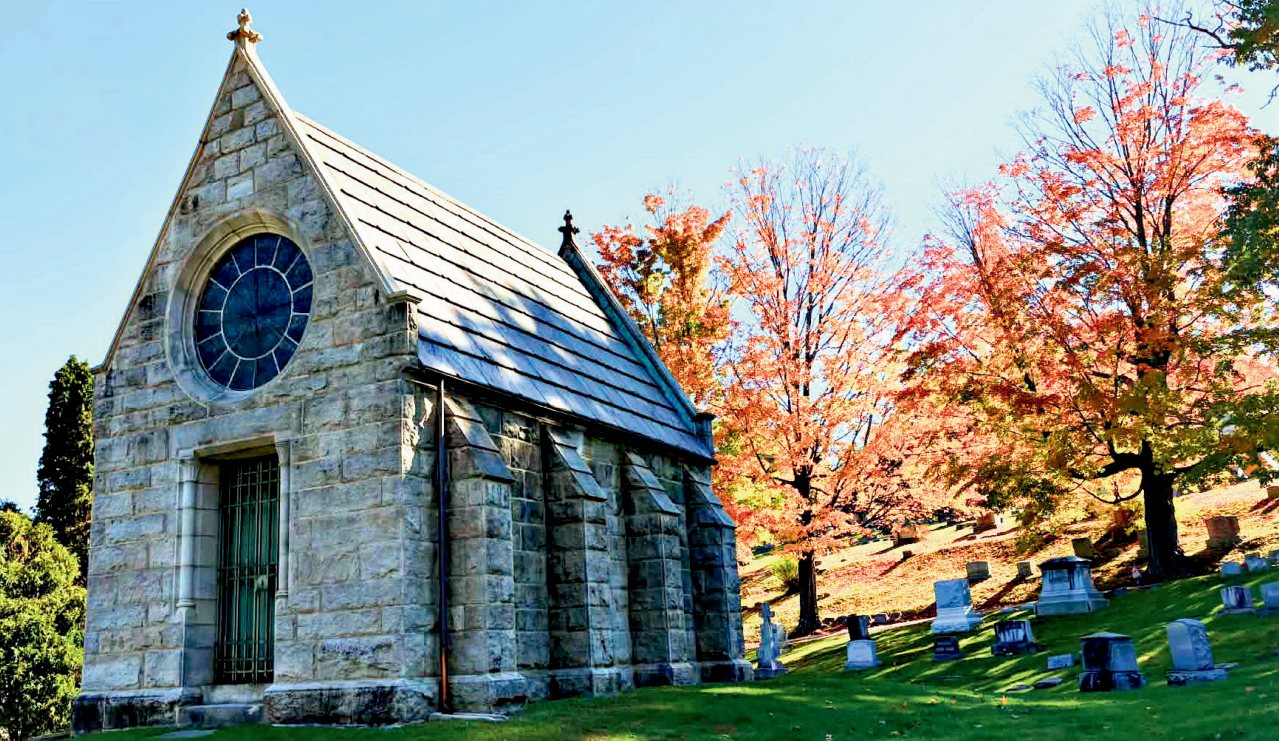
William Walker Scranton died at the age of 72 from diabetes on December 3, 1916. He was interred in the family mausoleum/chapel on Block 11 of the Dunmore Cemetery.
The indigenous people of the Lake Champlain region believed the waters n that area to be home to a sea serpent. In 1879, the year of Mr. Scranton’s encounter, The New York Herald reported multiple sightings of a serpent in the waters from North Carolina to the Newfoundland region.
Today the residents of the Lake Champlain region celebrate Champ – their version of the Loch Ness Monster. If a serpent does exist, it is now protected by laws in New York and Vermont.
Did William Walker Scranton encounter a cryptid, sea serpent, or a North American “Nessie” on that autumn day so long ago? This author would like to think so.
 See it as it ran in printOpen the November 2026 Dunmorean to page 6 →